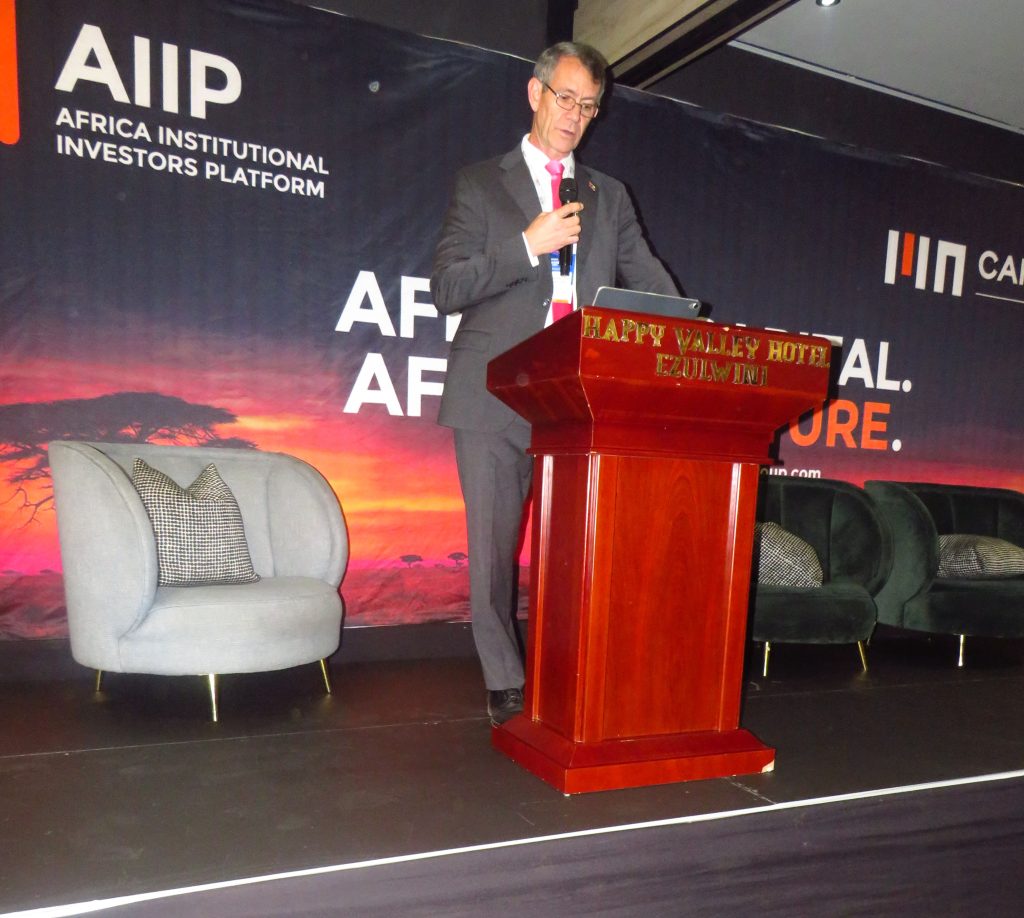
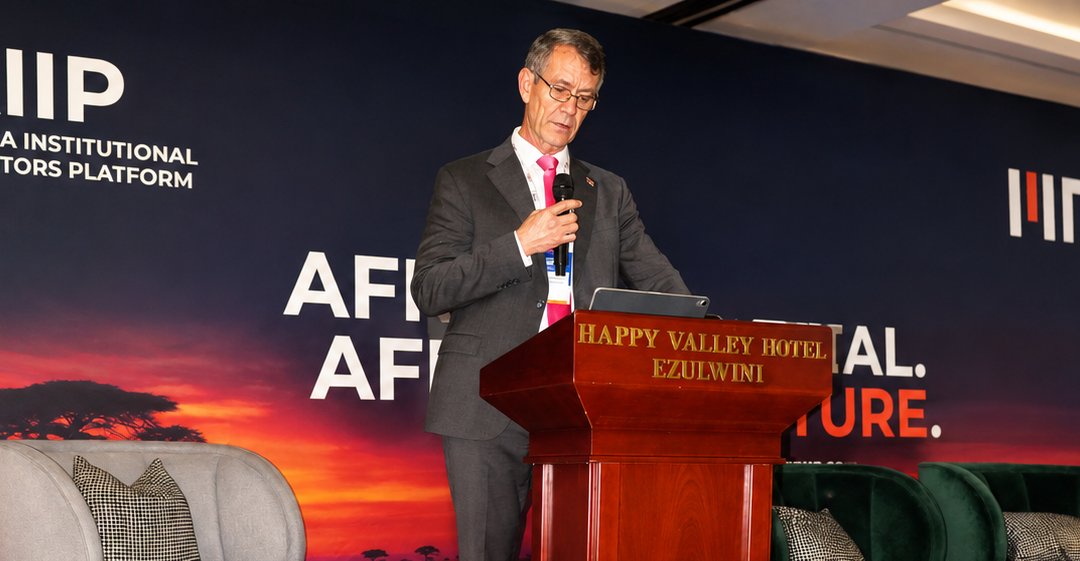
EZULWINI — Eswatini’s pension fund assets have reached a record scale—representing nearly 57% of national Gross Domestic Product (GDP)—putting domestic retirement savings at the center of the country’s economic growth strategy. However, Minister of Finance Neal Rijkenberg has issued a firm warning against viewing private savings as a substitute for public financing.
Speaking at the 5th Annual Eswatini Institutional Investment Forum held at the Happy Valley Hotel under the theme “Mobilising Institutional Capital for Sustainable Growth and Regional Impact,” Rijkenberg declared that pension money is strictly private wealth belonging to workers and retirees, not a government cheque book.
Highlighting that the primary duty of trustees is to protect members’ savings, the Finance Minister emphasized that developmental investments must still meet rigorous commercial standards. He rejected the premise that local deals should accept lower returns or weaker oversight, asserting that developmental investment must never mean concessionary investment, nor should local projects imply low-quality structures. Before committing capital, institutional investors were urged to demand competent management, independent oversight, transparent fees, and verifiable performance tracking.
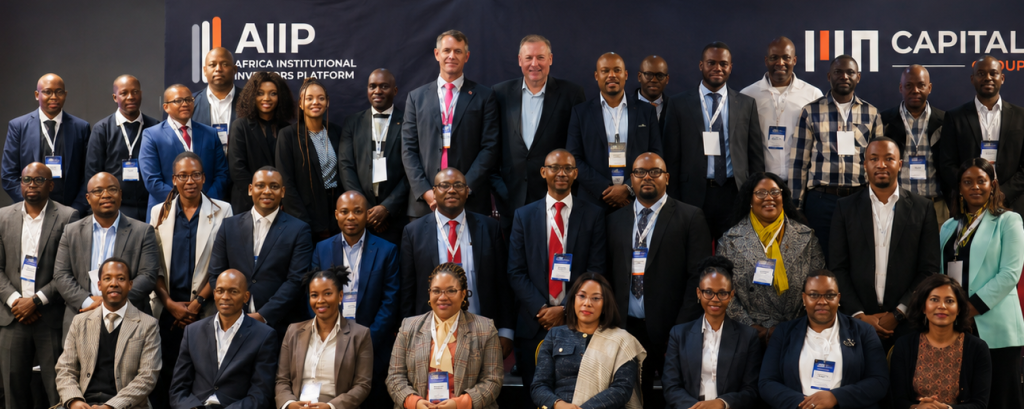
Rather than relying on pension funds to bail out public finances, Rijkenberg noted that the state’s true role is to create an enabling environment. Pointing out that Eswatini cannot borrow its way to prosperity or tax its way to competitiveness, he stressed that public resources must be used strategically to unlock and crowd in private capital through policy certainty, fair regulation, transparent procurement, and proper project preparation.
To shift the narrative from dialogue to execution, the Finance Ministry outlined a targeted operational strategy. The approach focuses on establishing a prioritized pipeline of bankable infrastructure projects, allocating early-stage funding for project preparation, fostering regional co-investment with SADC funds, closing at least one major benchmark transaction, and maintaining full public reporting on capital performance.
Ultimately, the discussion points to a clear, unified objective for the sector. As Minister Rijkenberg summarized, the goal is not to compel pension funds into financing public projects, but rather to construct development opportunities strong enough to attract institutional capital on sound commercial terms.