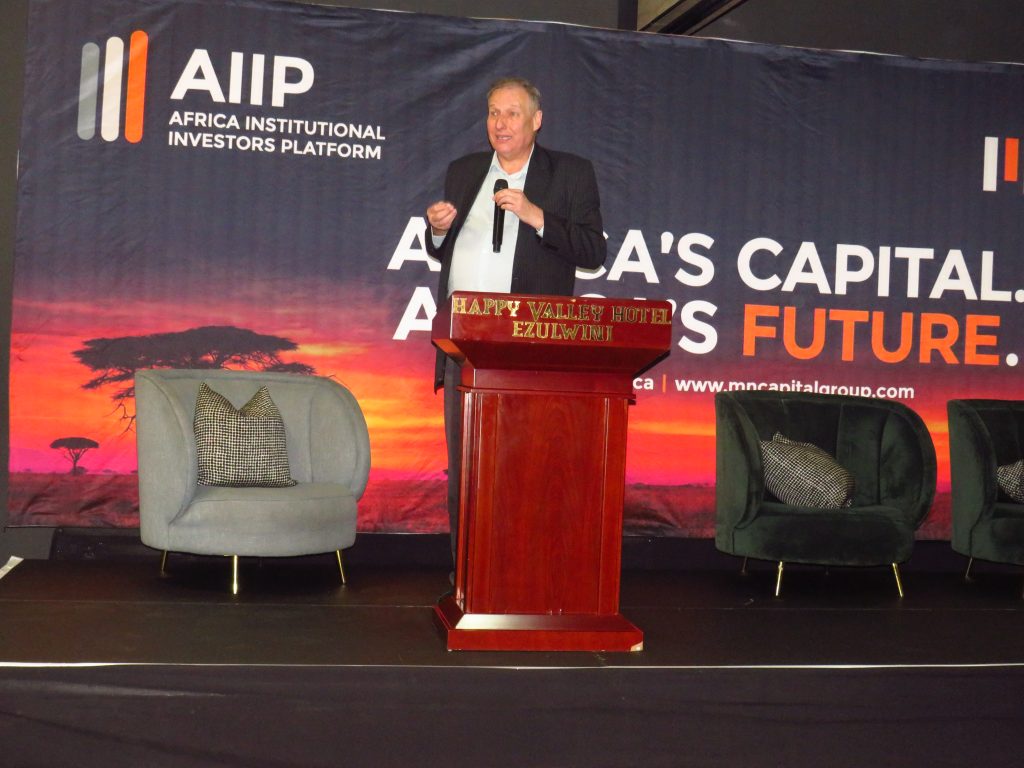
EZULWINI, Eswatini — The global economy has entered a new financial era, and businesses, governments and investors can no longer rely on the cheap money that supported markets for decades.
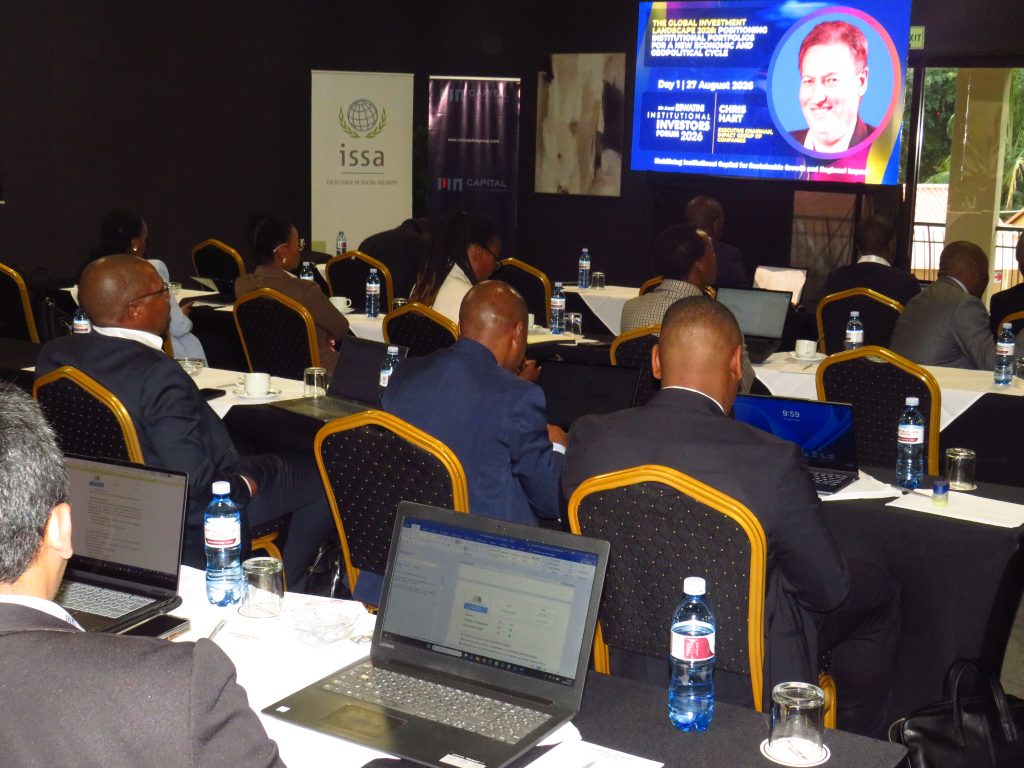
That was the key message from Chris Hart, Executive Chairman of the Impact Group of Companies, who addressed the 5th Annual Eswatini Institutional Investors Forum at the Happy Valley Hotel in Ezulwini.
Speaking under the theme “Mobilising Institutional Capital for Sustainable Growth and Regional Impact,” Hart argued that the COVID-19 pandemic and subsequent energy price shocks marked a turning point for the global financial system, bringing an end to an extended period of exceptionally low interest rates.
Hart said years of easy money helped governments and businesses absorb major economic shocks, from the dot-com crash to the 2008 financial crisis. But the prolonged period of low borrowing costs also encouraged excessive government spending, rising debt and investments that may not have been viable under normal financial conditions.
Now, with interest rates higher as central banks fight inflation, governments are facing increasing debt-servicing costs.
“Even the United States, about a fifth of their budget is spent on interest, and that’s with low interest rates,” Hart noted, warning that heavily indebted countries could face growing pressure to raise taxes and reduce spending.
For businesses and investors, however, higher interest rates could also serve a useful purpose.
Hart argued that expensive capital forces investors to become more disciplined and separates viable businesses from ventures that depended heavily on cheap financing.
“When your interest rates are too low, the cost of capital is too low, you start to invest in rubbish,” he said.
Despite the challenges, Hart believes the current environment is creating opportunities — particularly in emerging and frontier markets.
He noted that developed economies are growing at roughly 1.8%, compared with about 4.2% for emerging markets. Frontier markets, meanwhile, account for around 20% of the world’s population but only about 5% of global economic output.
For Hart, that gap represents potential.
He cautioned investors against simply accepting international ratings or negative economic headlines as a complete picture of a market.
“One must never look at the top level; one must always look behind that for the opportunities,” he said.
South Africa, he suggested, provides a good example. While struggling state-owned companies have created significant economic challenges, their weaknesses have simultaneously opened opportunities for private businesses, particularly in alternative energy and logistics.
Hart also challenged traditional approaches to investment risk, questioning the industry’s heavy focus on market volatility.
While conventional portfolios often treat cash as safe and equities as risky, Hart argued that inflation can quietly destroy the purchasing power of cash.
“What if I said instead of saying volatility is your risk, inflation is your risk?” he asked.
Under that approach, an investment that appears stable may actually be exposing investors to significant long-term losses if its returns fail to beat inflation.

Hart’s message ultimately centred on discipline and the quality of capital allocation.
The end of cheap money means governments must manage debt more carefully, businesses must justify investment decisions and investors must look beyond traditional measures of risk.
For institutional investors in Eswatini and across the region, the changing global environment may therefore be less about avoiding risk and more about learning to identify where genuine value exists beneath the headlines.
As Hart’s remarks suggested, in a world where capital is no longer cheap, the smartest money may be the money that knows where to look.